

Practical guides to fixing what matters.
The EdgeProtect blog is a set of free, practical guides for IT and security teams. They explain how to rank flaws by real risk instead of raw severity, how exploit likelihood scoring works, how to find what you have exposed online and how to explain cyber risk to a board.
Every guide, by topic.
Pick a topic, or read them all. Every guide is free to read, with no sign-up.
The week in threats, every Friday.
Each Friday we round up the flaws newly confirmed as exploited, the biggest jumps in exploit likelihood, what attackers went after and the week's malicious packages.
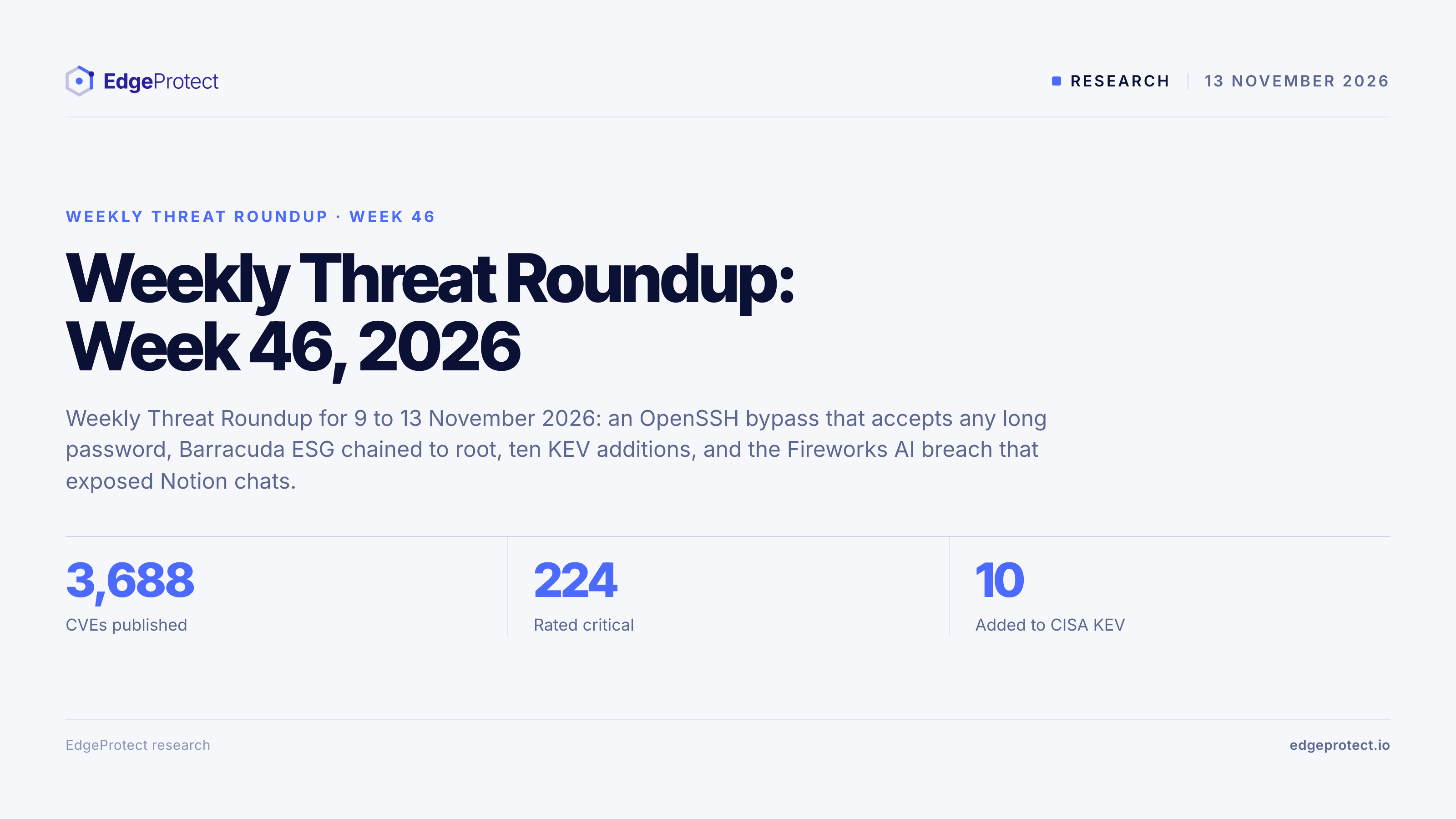
Week 46: 9 to 13 November 2026
Weekly Threat Roundup for 9 to 13 November 2026: an OpenSSH bypass that accepts any long password, Barracuda ESG chained to root, ten KEV additions, and the Fireworks AI breach that exposed Notion chats.Read the roundup: week 46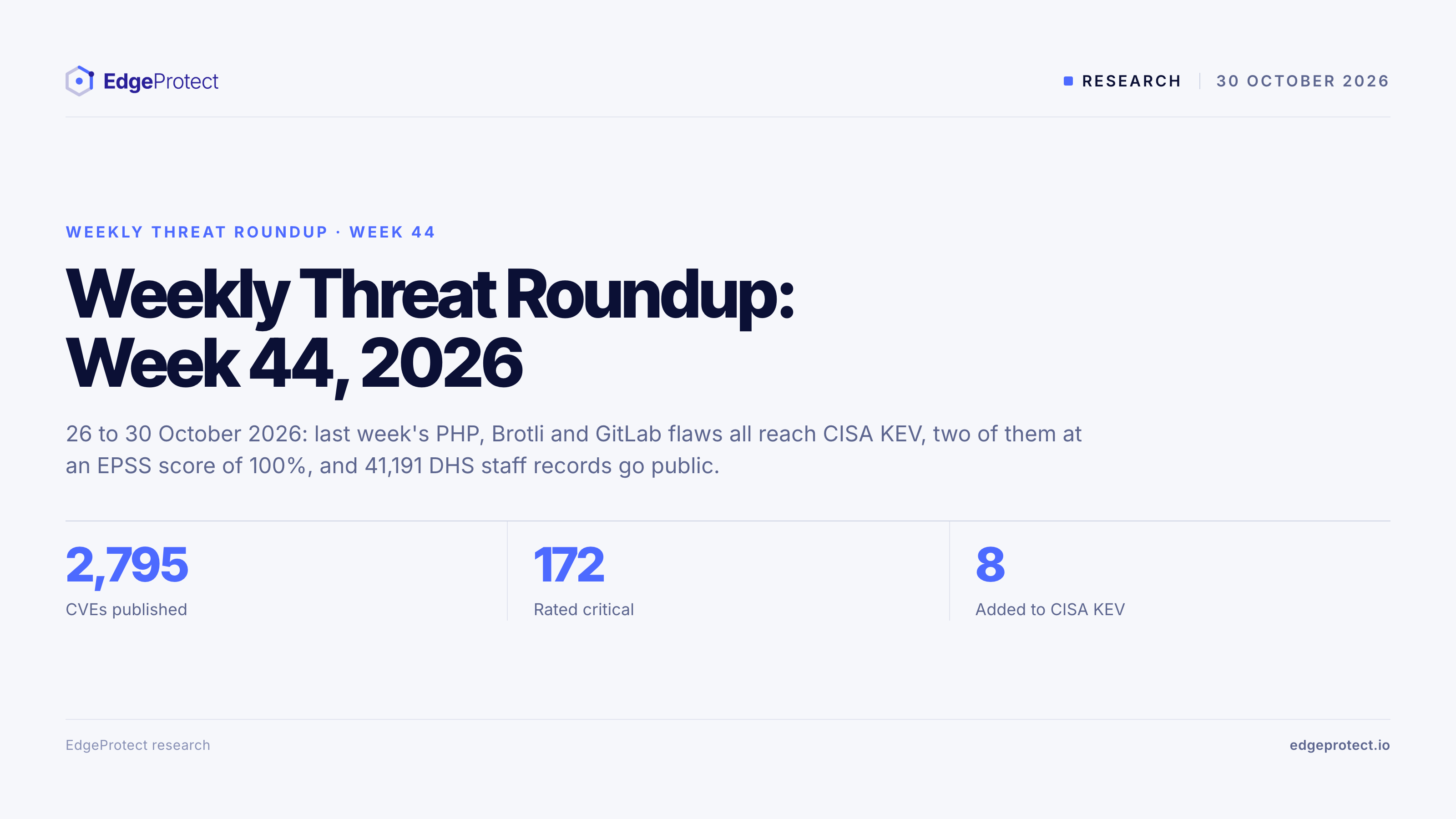
Week 44: 26 to 30 October 2026
Weekly Threat Roundup for 26 to 30 October 2026: PHP2Shell reaches EPSS 100% and CISA KEV, a Linux kernel bug chains into it, Dell ships 47 CVEs in one release, and 41,191 DHS staff records go public.Read the roundup: week 44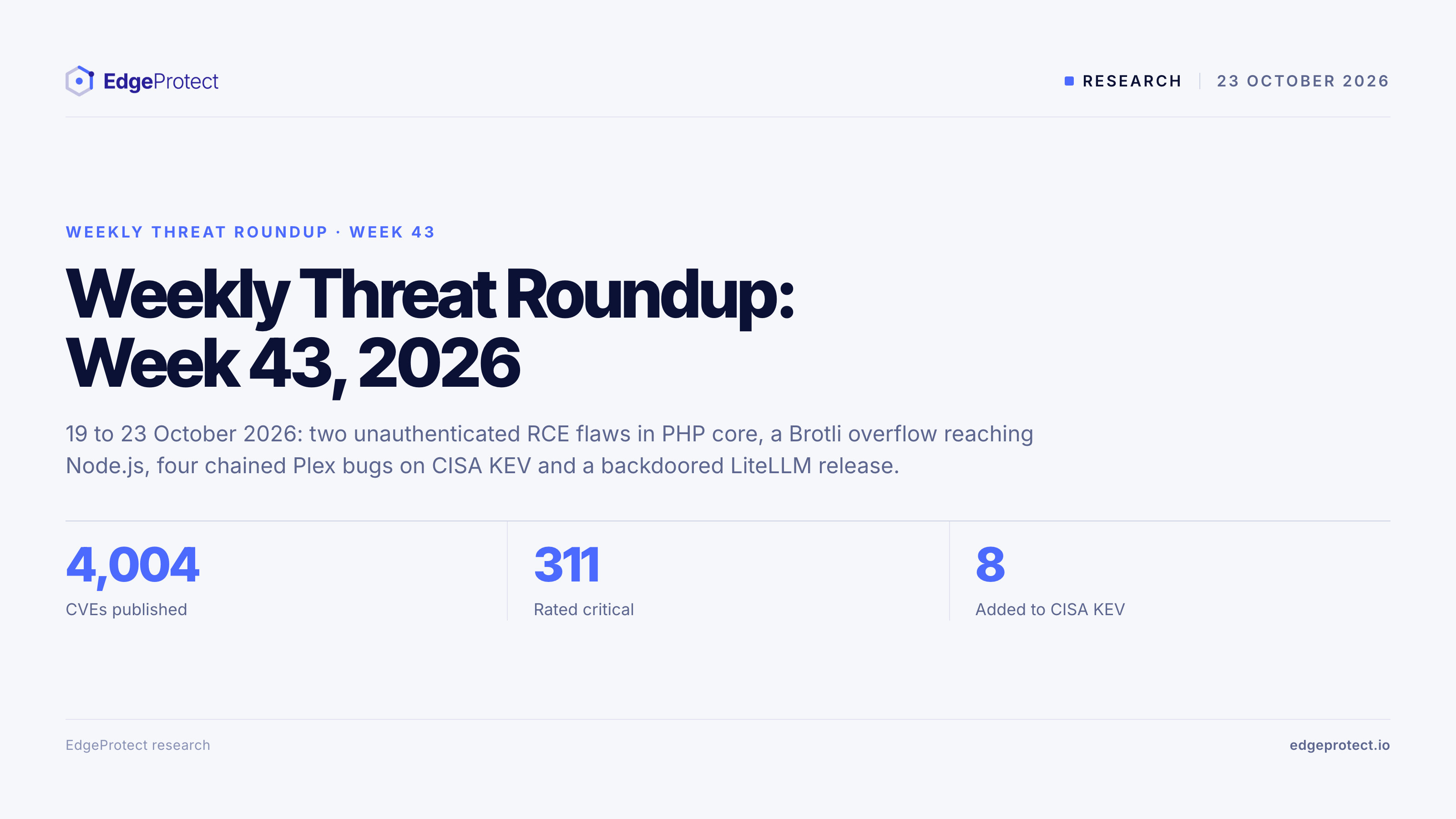
Week 43: 19 to 23 October 2026
Weekly Threat Roundup for 19 to 23 October 2026: PHP2Shell, the Brotli overflow in Node.js, four chained Plex bugs on CISA KEV, GitLab's second CVSS 10 and the backdoored LiteLLM release.Read the roundup: week 43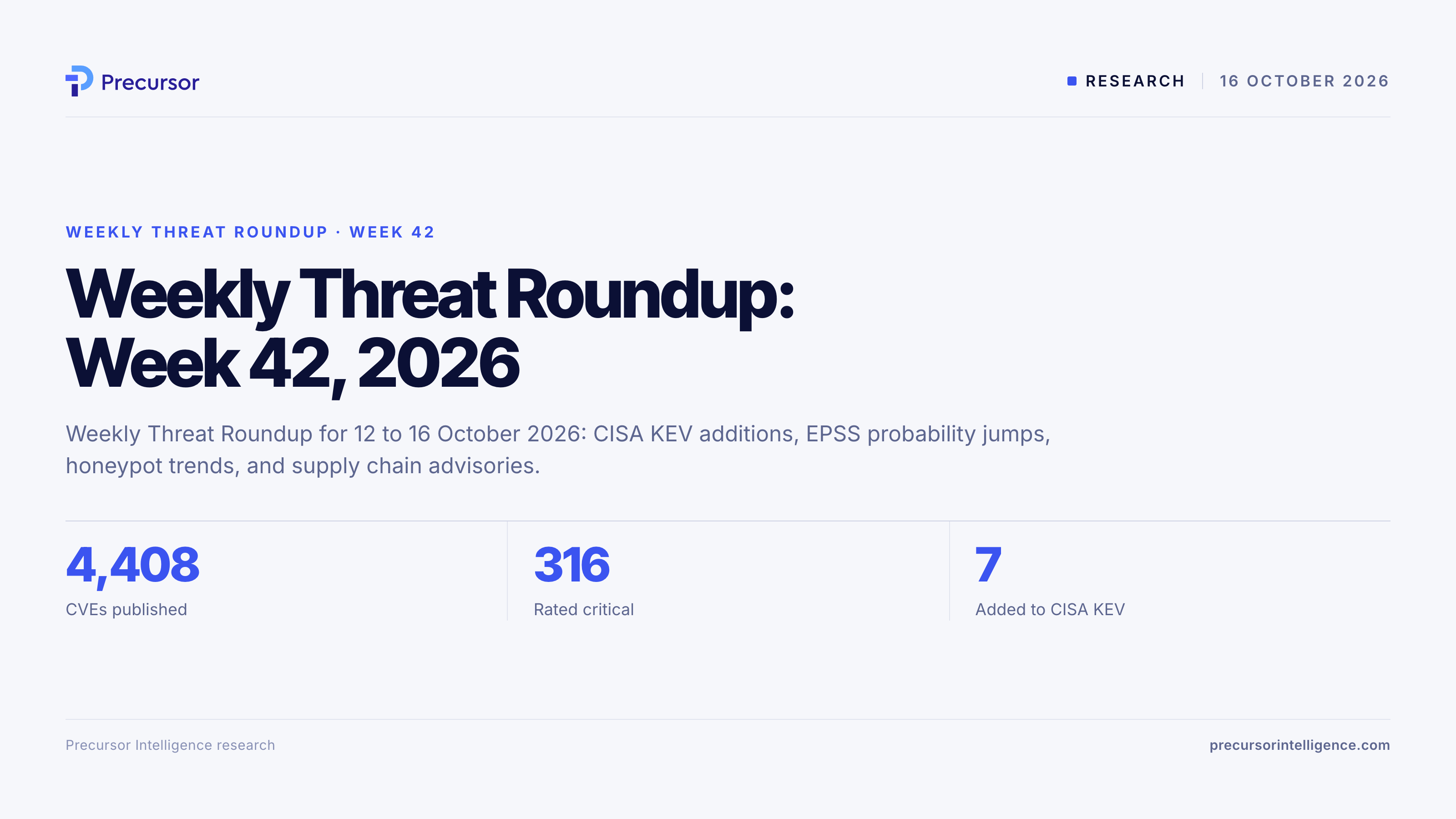
Week 42: 12 to 16 October 2026
Weekly Threat Roundup for 12 to 16 October 2026: CISA KEV additions, EPSS probability jumps, honeypot trends, and supply chain advisories.Read the roundup: week 42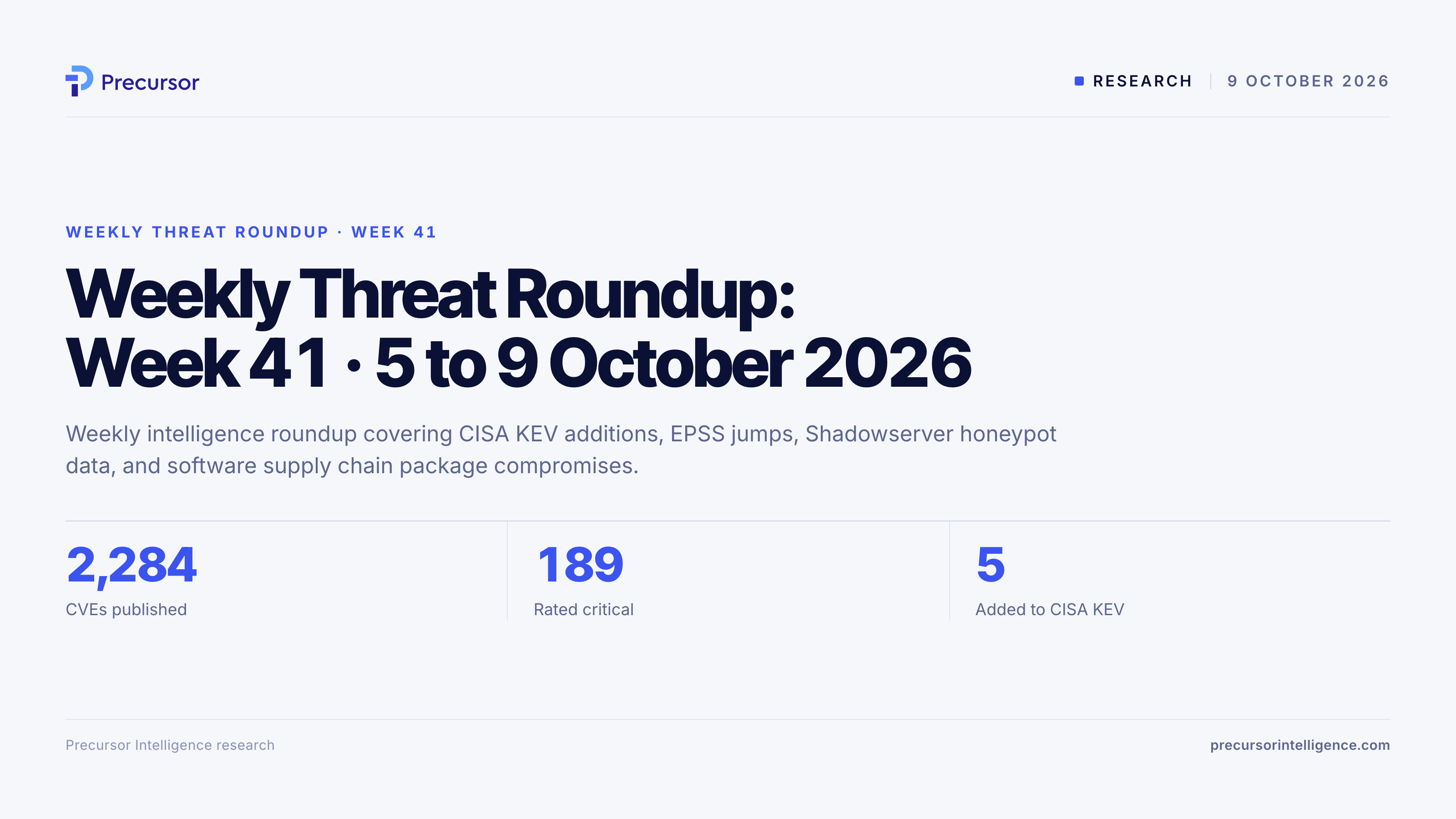
Week 41: 5 to 9 October 2026
Weekly intelligence roundup covering CISA KEV additions, EPSS jumps, Shadowserver honeypot data, and software supply chain package compromises.Read the roundup: week 41
We do the ranking for you, continuously.
EdgeProtect gives every published flaw a risk score from 0 to 100, built from evidence it is being exploited, how severe it is, how widely exposed it is and threat activity. You see only the flaws in software you use, riskiest first.
- Evidence of attacks counts mostA flaw being exploited outranks one that only sounds worse on paper.
- Confirmed exploited means act nowAnything confirmed exploited is marked Emergency patch, whatever its score.
- Over 400,000 CVEsrescored as the evidence changes, so the order shifts when the threat does.
The week's threats, in one short email.
A free threat intelligence email, written weekly by the team behind EdgeProtect. Add your work email to get it.
Who writes the EdgeProtect blog?
The guides are written by the Precursor Security team, the company behind EdgeProtect. Each guide shows its byline and the team it comes from.
Do I need an account to read the guides?
No. Every guide is free to read without signing up. Each one is also available as plain Markdown: add .md to the end of its address, which suits AI assistants and offline reading.
How do the guides relate to EdgeProtect?
They explain the thinking behind it. EdgeProtect gives every published flaw a risk score from 0 to 100, led by evidence it is being exploited, and shows you the flaws in the software you use, riskiest first.
How can I hear about new threats by email?
Sign up to The EdgeProtect Brief on this page. It is a free threat intelligence email, written weekly.
Read the guide. Then let us do the sorting.
Start free, with no card and nothing to install. Tell us the software you run and we match it against every published flaw, then rank what we find by risk.